It's August, and I'm in the thick of back-to-school season with my kids. The first days and weeks of a new year are spent watching how things unfold day to day, and settling into a routine of schedules, communications, and events. Throughout it all, I keep asking: Is this year off to a good start?
And that question isn't just for my kids' schools. It's for all the schools our team at Rhodes Branding has supported in getting families to the first day. I feel solid about the work I know well: the campaign, the messaging, and the lead strategy. But once a family walks through the door, I find myself wondering what they're actually experiencing day to day, and whether the confidence we built during the campaign is holding up now that it's over.
Enrollment Marketing vs. Enrollment Management
There's a useful distinction between enrollment marketing and enrollment management. Enrollment marketing is the work of awareness, consideration, and decision: getting a family from "never heard of you" to "proud [insert school mascot] parent." It's campaign strategy, messaging frameworks, digital advertising, and the metrics that show up on a dashboard: impressions, leads, application starts, and cost per conversion.
Enrollment management is the bigger container that discipline sits within: the full arc from prospect through enrollment, and then, most importantly, what comes after. Retention and advocacy: whether a family returns next year, and whether they tell their friends to come too.
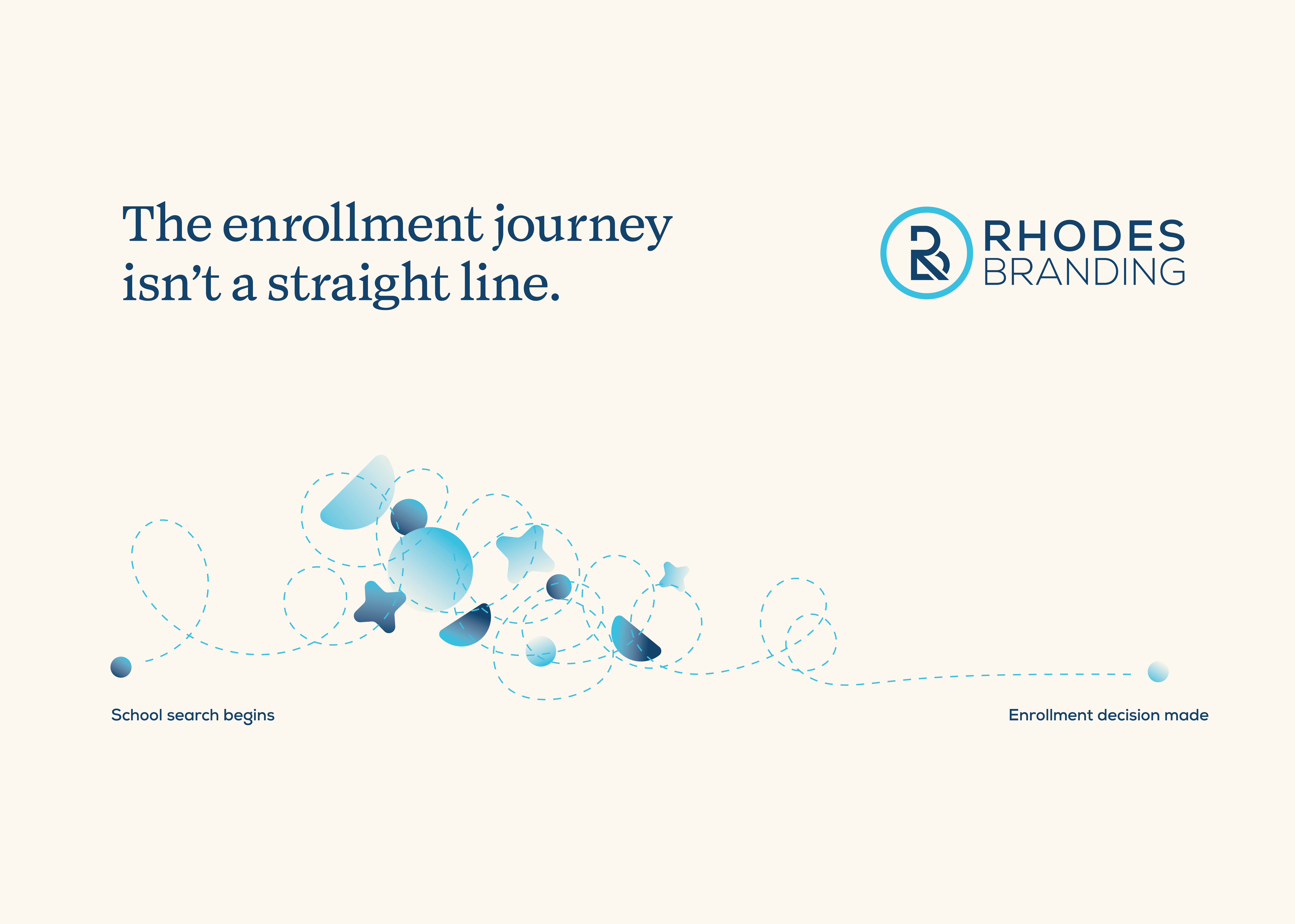
Most schools invest heavily in systematizing everything up to "enroll" and comparatively little in everything after it. The funnel doesn't actually end at the Application Submitted page. It continues into a stage that rarely gets the same strategic attention: retention. And the first 30 days of school are exactly that stage, playing out in real time, whether anyone is managing it or not.
Clarity Doesn't Stop Mattering Once a Family Enrolls
One of the clearest ideas in enrollment work is that schools don't usually have communication problems. They have clarity problems. Families aren't confused because nobody's talking to them. They're confused because what's being said doesn't tell them clearly enough what to expect or what to do next. That idea is normally applied to the front end of the funnel: prospective families trying to figure out if a school is the right fit.
But clarity is just as decisive after enrollment. A family who's already said yes still needs to know: when will we hear from you, what does the first week look like, and where do we go if we have a question. Skip that, and the same confusion that would have cost you an inquiry earlier in the funnel now costs you retention instead.
The Advocacy Stage is Being Decided Right Now
Retention and advocacy aren't won with a single Open House event or a weekly email newsletter. Like higher in the funnel, it's won through a sequence: the right message, at the right frequency, relevant to where the family is. Awareness had a campaign. Consideration had a campaign. Enrollment had a campaign. The first 30 days deserve exactly the same level of intention because they're the opening moves in the retention and advocacy stages.
Treating the first 30 days as a real stage of the funnel, not a handoff to operations, means being just as deliberate about the touchpoints that are already happening:
- Open House: Plan it as the first proof point of the brand promise, not a logistics event. Send a reminder that sets expectations for what families will see and do when they arrive, and follow up afterward with a recap for anyone who couldn't attend.
- Teacher interactions and communications: Set a shared baseline so the experience doesn't depend on which classroom a family lands in. At minimum, every family gets a welcome note before day one, and every family knows how to reach their teacher in the first week. Every teacher will still run their classroom differently, but a baseline keeps the brand promise intact regardless of who's teaching. It also gives the side conversations already happening between parents in group chats or text chains something consistent to reinforce, instead of something uneven to notice.
- School-wide newsletters and announcements: Use these to set the communication rhythm explicitly, not just to pass along information. Tell families up front how often they'll hear from the school and where to look.
- A measure that goes past enrollment: Most schools can report their yield. Fewer can report how families rate their first month. A short two-question pulse survey at day 15 and day 30 (ie. How confident do you feel? What's gone unanswered?) is an early read on whether this year's families are trending toward advocacy or toward next year's withdrawal.
Ask any parent how the school year is going, and their answer is largely written in the first 30 days, not by the campaign that got them there, but by what happened once they arrived. That answer is the clearest signal of whether a school made it to the advocacy stage of its own funnel, or stalled out right after the decision.
As a mom, I want to be able to answer that question well. As a marketer, I know that the answer isn't determined by the enrollment campaign at all. It's determined by whether a school understood that its job wasn't finished when the campaign ended.

.jpg?width=645&height=450&name=2023_0831_Brevard_Estridge_A7IV_567%20(1).jpg)